
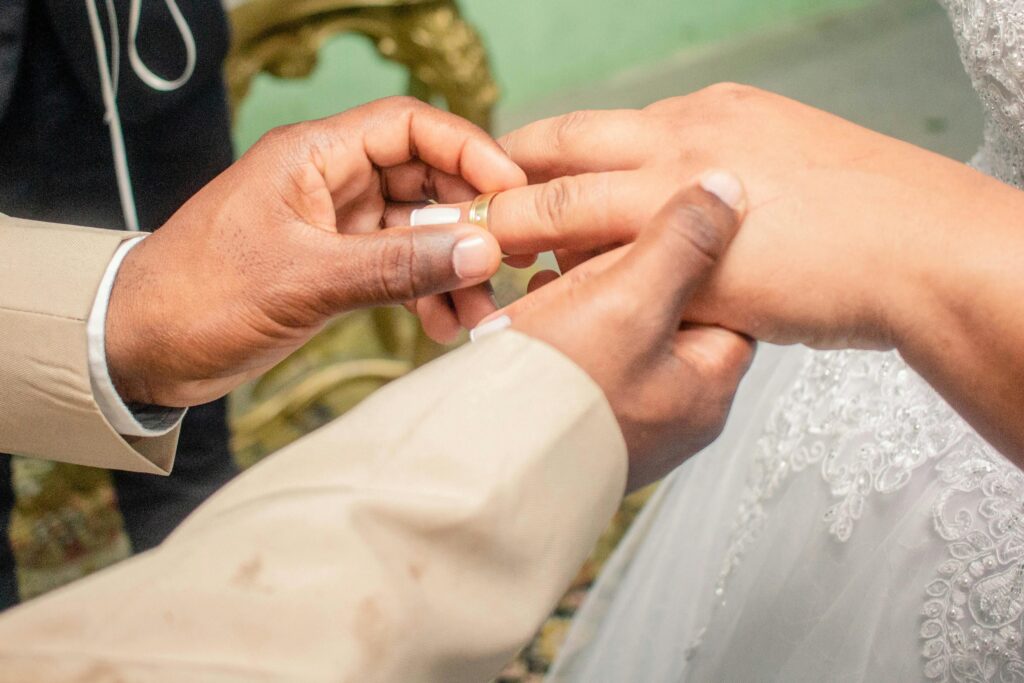
Marriage in Kenya is more layered than most people appreciate. Many couples go through elaborate ceremonies either religious or customary, without ever fully understanding whether what they did creates enforceable legal rights. That gap between cultural expectation and legal reality is exactly what the Marriage Act, 2014 was designed to close. Whether you are preparing for marriage, navigating a separation, or simply trying to understand what your marriage means on paper, this article breaks it all down without the legalese.
Types of Marriage Recognized in Kenya
The Marriage Act recognizes five distinct types of marriage, each with its own procedural requirements, governing authority, and rules on monogamy or polygamy.
1. Civil Marriage
Conducted by a Registrar of Marriages. It is strictly monogamous. Entering a civil marriage bars you from marrying another person while that marriage subsists. This is the most straightforward option for couples seeking a purely legal union with minimal religious or cultural formality.
2. Christian Marriage
Solemnized by a licensed minister of religion in a registered place of worship. Like civil marriages, Christian marriages are monogamous. The Marriage Act requires that notice be given before the ceremony, and the marriage must be registered after solemnization.
3. Customary Marriage
Governed by the customs of the community to which either or both parties belong. This type acknowledges practices such as dowry negotiations (bride price / ruracio) as part of the union’s formation. Importantly, customary marriages may be polygamous, but any subsequent marriage must be consistent with the relevant customary law. Under Section 6 of the Act, a man in a monogamous marriage cannot contract a customary marriage without first dissolving the existing one.
4. Hindu Marriage
Recognized under Hindu rites and customs as defined in the Act. Hindu marriages are monogamous and must be registered in the same manner as civil and Christian marriages.
5. Islamic Marriage
Conducted under Islamic law and governed by Islamic principles, including those relating to polygamy (up to four wives, subject to Quranic conditions of equal treatment). Disputes involving Islamic marriages including divorce, may be resolved through the Kadhi’s Courts, which have constitutional recognition under Article 170 of Kenya’s Constitution.
Quick Comparison
| Marriage Type | Conducted By | Polygamy Permitted | Registration Required |
|---|---|---|---|
| Civil | Registrar of Marriages | No | Yes |
| Christian | Licensed minister | No | Yes |
| Customary | Community elders/custom | Yes (subject to customary law) | Yes |
| Hindu | Hindu rites | No | Yes |
| Islamic | Islamic law / Kadhi | Yes (up to 4 wives) | Yes |
What Makes a Marriage Legally Valid?
The Act lays out clear conditions that must be met for any marriage in Kenya to be valid, regardless of type:
- Consent is non-negotiable. Both parties must freely and voluntarily agree to the marriage. Forced marriages are explicitly prohibited under Section 10 of the Act and can attract criminal liability.
- Age is set at a minimum of 18 years for both parties. This is a hard floor. Marrying a person below 18 is prohibited and constitutes an offence under both the Marriage Act and the Children Act, 2001.
- Capacity matters. Parties must be mentally capable of consenting to marriage at the time of the ceremony.
- Prohibited relationships apply. The Act bars marriage between close blood relatives and certain relatives by affinity, as listed in the Third Schedule.
- Witnesses are required. For civil and Christian marriages, at least two witnesses must be present at the ceremony.
- Registration is where many Kenyans fall short. All marriages (including customary ones) must be registered. An unregistered customary marriage still has legal recognition under the Act, but registration provides concrete documentary proof that becomes critical in property disputes, inheritance claims, and administrative matters (e.g., name changes, visa applications, pension access). Section 44 of the Act requires parties to a customary marriage to apply for registration within three months.
Rights and Responsibilities in Marriage
The Constitution of Kenya, 2010 (Article 45(3)) guarantees spouses equal rights at the time of marriage, during the marriage, and upon dissolution. This is important to emphasize: equality is constitutional, not just aspirational.
In practical terms, this means:
- Mutual duty of support. Each spouse has a legal duty to support the other and to contribute to the household according to their means. This is not merely moral; it has legal standing in maintenance proceedings.
- Child welfare. Both parents bear equal responsibility for the care, upbringing, and financial support of their children, regardless of which parent has custody. This obligation survives divorce.
- Matrimonial property. This is where things get complicated, and many couples are surprised. Marriage does not automatically confer equal ownership of all assets. The Matrimonial Property Act, 2013 governs this separately. It recognizes that each spouse retains ownership of property they owned before the marriage (separate property), while property acquired during the marriage may be treated as matrimonial property depending on contribution; financial or otherwise. Courts have increasingly recognized non-monetary contributions such as domestic work and child-rearing which, while decided under earlier law, shaped the conversation that led to the 2013 Act.
The key takeaway: a marriage certificate does not automatically entitle you to half of everything. Contribution is what matters.
Ending a Marriage Legally in Kenya
Divorce is legal in Kenya. What varies is the procedure depending on the type of marriage. What does not vary is this: you must legally dissolve a marriage before entering another one if the first was monogamous. Remarrying without dissolution is bigamy, which is a criminal offence under Section 171 of the Penal Code. It is interesting to note that divorce rates in Kenya have increased in recent years and by 2022 they stood at 9.3%.
Grounds for Divorce
For civil and Christian marriages, the primary ground recognized under the Marriage Act is irretrievable breakdown, which can be demonstrated through:
- Adultery – voluntary sexual intercourse with a person outside the marriage
- Cruelty – physical or mental conduct rendering continued cohabitation intolerable
- Desertion – one party leaving without consent for at least three years
- Exceptional depravity – conduct of a grave and abnormal nature (this is deliberately broad to cover serious situations not captured by the other grounds)
Procedure by Marriage Type
- Civil and Christian marriages are dissolved through the High Court (or the Family Division thereof). The petitioner files a petition, the respondent is served, and the matter proceeds with or without contest. A decree nisi is issued first, followed by a decree absolute after a waiting period.
- Islamic marriages may be dissolved through the Kadhi’s Court. Islamic law permits talaq (husband’s repudiation), khul’ (wife’s request for divorce in exchange for returning the mahr/dowry), or judicial dissolution.
- Customary marriages can technically be dissolved following community procedures, but any dissolution should be formally recognized through legal channels to avoid future disputes, particularly around property and children.
- Separation – whether by agreement or court order – does not end a marriage in Kenya. A separated spouse cannot remarry. Only a court decree of dissolution (or, in Islamic marriages, proper talaq with Kadhi’s Court recognition) ends the legal tie.
Common Misunderstandings About Marriage Law in Kenya
- “Living together means we’re married.” Not automatically. Cohabitation no matter how long does not create a legally recognized marriage under Kenyan law. There is no “common law marriage” as understood in some other jurisdictions. However, prolonged cohabitation can affect certain property claims under equity principles, but this is not the same as marriage.
- “Dowry payment completes the marriage.” Dowry is a customary requirement and is legally significant in the context of customary marriage. But it is not a substitute for registration. An unregistered customary marriage is still legally recognized but harder to prove, especially in court.
- “Only church weddings are legally valid.” This is surprisingly common. Civil, customary, Hindu, and Islamic marriages are all equally valid under the Marriage Act. A church wedding is one option, not the gold standard for marriage in Kenya.
- “My marriage certificate means I own half the matrimonial home.” Not necessarily. As explained above, ownership in marriage is governed by the Matrimonial Property Act, 2013, and depends on contribution. A certificate proves the marriage existed; it does not predetermine asset division.
- “I can convert my monogamous marriage into a polygamous one later.” No. Under Section 8 of the Marriage Act, a person in a monogamous marriage cannot contract a subsequent marriage during the subsistence of that marriage. The nature of the marriage is fixed at the time of solemnization.
Why Kenya Introduced One Marriage Law
Before 2014, Kenya’s marriage laws were fragmented across multiple statutes. The Marriage Act (Cap. 150), the African Christian Marriage and Divorce Act, the Mohammedan Marriage, Divorce and Succession Act, and others. Each governed a different segment of society, creating inconsistency and, frankly, a lot of confusion about marriage in Kenya.
The Marriage Act, 2014 (Act No. 4 of 2014) brought all of this under one roof. It defines marriage as a voluntary union between a man and a woman, whether in a monogamous or polygamous union, registered in accordance with the Act. It sets out valid marriages, how they must be registered, the rights and obligations of spouses, and how marriages can be legally ended. The law also aligns with Kenya’s Constitution of 2010, particularly Article 45, which protects the right to marry and guarantees equal rights for spouses during and after a marriage.
Understanding this Act is not just academic. It directly determines your property rights, inheritance position, and what legal process you must follow if a marriage breaks down.
FAQs
What is required to get married in Kenya?
To be married in Kenya, both parties must be over 18 years old and capable of giving free and informed consent. Usually, the couple must show valid identification documents such as national ID cards, passports or birth certificates. Other requirements may vary depending on the nature of the marriage being registered, be it civil, Christian, customary, Hindu or Islamic. Couples will also usually have to fill in the necessary application forms and comply with any notice requirements imposed by the registrar.
How much does it cost to get married at the courthouse in Kenya?
The price of a civil marriage in a registrar’s office or courthouse in Kenya depends on the type of license and the place. Government fees may change from time to time and couples are advised to check current fees with the Registrar of Marriages. There may be extra charges for required paperwork, certified copies, or a commissioner for weddings not performed at the registrar’s office. Please review the latest fee schedule before applying so that you are not surprised by any extra costs.
What happens after the 21 days notice of marriage in Kenya?
Following the 21-day notice period, the registrar will review whether any valid objections to the proposed marriage have been made. If no legal impediments are raised, the couple can proceed with the marriage ceremony and registration process. The registrar can then issue the necessary authorization or certificate to allow the marriage to go ahead. If an objection is raised it must be investigated and resolved before the marriage can go ahead.
How long does it take to register a marriage in Kenya?
The time for registering a marriage in Kenya depends on the type of marriage and whether all the required documents are submitted in the right way. In the case of civil marriages the process usually involves the compulsory notice period so the whole process can take a few weeks. Normally, after the ceremony has taken place, the marriage certificate is processed and issued in a relatively short time depending on the workload of the registrar. Delays can happen if documents are incomplete or need further verification.
The Bottom Line
The Marriage Act, 2014 is not just about wedding ceremonies. It determines your legal standing as a spouse, your property rights, your obligations to your children, and your pathway out of a marriage if it breaks down. Whether you married in church, under customary rites, before a registrar, or under Islamic or Hindu law, the Act touches your union; and failing to understand it creates risk.
Registration is not bureaucratic red tape; it is the document trail that protects you. Property rights require active legal attention, not passive assumptions. And if you are ending a marriage, doing it properly through the recognized legal channel is not optional; it is the only way to fully close that chapter and move forward without legal exposure.
For situations involving complex property disputes, contested divorces, inheritance overlap, or cross-type marriage conversions, engaging a family law advocate is strongly advisable. The law provides a framework, but every marriage has facts that demand individual legal analysis.