
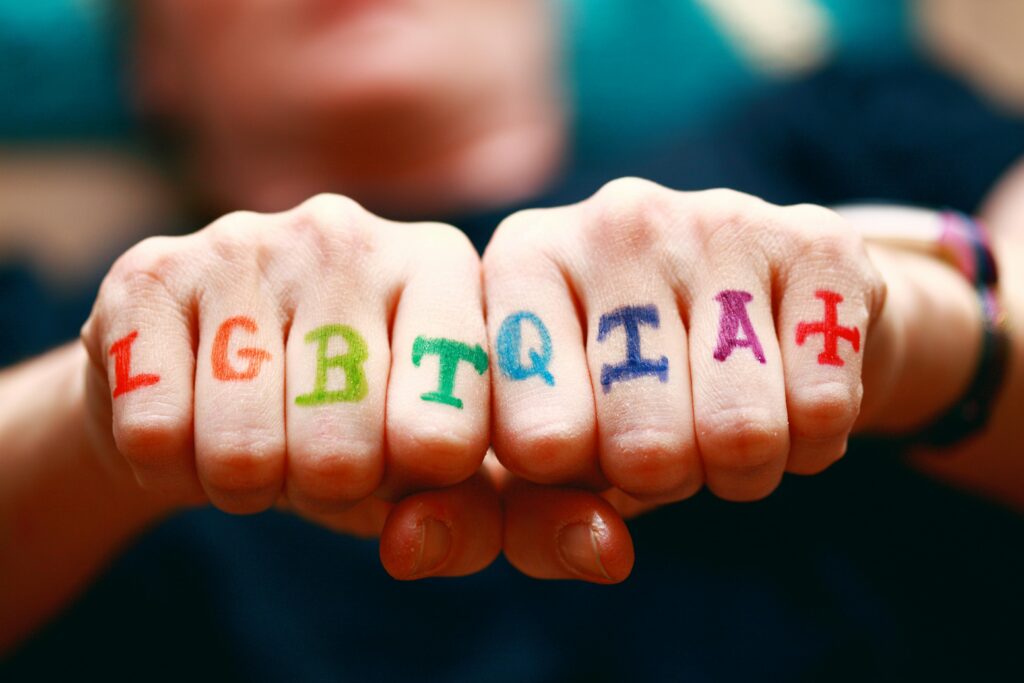
The acronym is everywhere – in news headlines, workplace diversity policies, school curricula and social media bios. LGBTQIA+ has moved from being a niche term used in specific communities to a staple of mainstream discussion. Knowing is not only vocabulary. It’s about seeing the actual people behind those words, and why it still matters (legally, socially, and culturally) in today’s world.
LGBTQIA+ and why it matters
Understanding the acronym is step one. Understanding why it still matters is step two.
1. Human Rights and Legal Protections
The global picture is still very mixed. Same-sex relationships are criminalized in at least 64 countries, and in some of them, they are punishable by death, as of 2024. Even in countries with formal legal protections, the enforcement and cultural acceptance of those laws vary enormously.
In a landmark ruling in Bostock v. Clayton County (2020), the Supreme Court of the United States extended Title VII protections in the workplace to LGBTQ+ employees. But there are real concerns, like health care discrimination, housing insecurity and violence. According to the Williams Institute at UCLA, LGBTQ+ adults are twice as likely to live in poverty as non-LGBTQ+ adults.
2. Identity, Mental Health, and the Power of Recognition
Recognition is not merely symbolic. Consistent research shows that the mental health of LGBTQIA+ individuals who are accepted by families and communities is significantly better. According to a study by The Trevor Project, LGBTQ+ youth who reported high levels of social support from their family had a suicide attempt rate less than half that of youth who reported low or no family support.
On the other hand, stigma, rejection and invisibility have measurable costs. LGBTQIA+ populations experience higher rates of depression, anxiety, and suicide, not because of who they are, but because of how they are too often treated. It is not just a social problem but a public health problem.
3. Cultural Visibility and Shifting Norms
Representation isn’t just feel-good progress. It changes outcomes. LGBTQIA+ people see themselves reflected in stories, curricula and institutional policies that tell them they belong. That visibility can be life-saving, especially for young people.
There has been a lot of change in attitudes in the last 20 years. In addition Gallup polling shows support for same-sex marriage in the U.S. has increased from 27% in 1996 to 71% in 2023. That’s no accident, it correlates strongly with increased visibility, personal familiarity and cultural normalization.
What Does LGBTQIA+ Mean?
Let’s break it down, letter by letter.
L — Lesbian A lesbian is a woman who is romantically and/or sexually attracted to other women. The term is primarily used by women and non-binary people who feel it fits their experience, though identity is always self-defined.
G — Gay “Gay” most commonly refers to men attracted to men, though it’s also used as a broader term for anyone attracted to people of the same gender. Historically, it was one of the first widely adopted identity labels within the community.
B — Bisexual Bisexual describes people who experience attraction to more than one gender. It’s often defined as attraction to their own gender and others. It’s worth noting that bisexuality doesn’t imply equal attraction to all genders or require any particular relationship history. It’s about the capacity for attraction, not a checklist.
T — Transgender Transgender (often shortened to “trans”) refers to people whose gender identity differs from the sex they were assigned at birth. This is a gender identity, not a sexual orientation. Trans people can be straight, gay, bisexual, or anything else. Transgender is an umbrella term itself, encompassing a wide range of experiences.
Q — Queer or Questioning “Queer” has a dual role here. Historically used as a slur, it has been widely reclaimed as an inclusive, flexible identity label by people who don’t feel other terms fully capture their experience. It’s also sometimes used as a catch-all for the broader community. “Questioning” acknowledges those who are still exploring their sexual orientation or gender identity.
I — Intersex Intersex refers to people born with physical sex characteristics; chromosomes, hormones, and anatomy that don’t fit typical definitions of male or female. Intersex is a biological reality, not a gender identity or sexual orientation. According to Intersex Human Rights Australia, intersex variations occur in approximately 1.7% of the population.
A — Asexual (and sometimes Ally) Asexual (often shortened to “ace”) describes people who experience little or no sexual attraction to others. Asexuality exists on a spectrum and some asexual people still experience romantic attraction (aromantic and asexual are different things). The “A” is occasionally also associated with “Ally,” referring to non-LGBTQIA+ people who actively support the community, though this is debated within the community itself.
+ — And Beyond The plus sign is doing a lot of work and intentionally so. It represents identities not explicitly listed, including pansexual (attraction regardless of gender), non-binary (not exclusively identifying as a man or woman), genderfluid, Two-Spirit (a term used by some Indigenous peoples), and many others. The language is still evolving, and the “+” is an acknowledgment that any fixed acronym will always be incomplete.
Common Misunderstandings
A few persistent misconceptions are worth addressing directly.
- “It’s just a trend.” Sexual orientation and gender identity aren’t products of social media, fantasies or cultural fashion. What has changed is the language people have available to describe themselves, and the safety some people feel in doing so. Coming out rates are rising not because more people are suddenly LGBTQIA+, but because more feel they can say so openly.
- “There are too many labels.” Labels are tools. They help people find community, communicate their experiences, and access targeted support. You don’t have to use all of them, or any of them, but the existence of many terms isn’t confusion; it’s precision. Identity is complex, and language is catching up.
- Gender identity vs. sexual orientation. These are frequently conflated and are fundamentally different things. Sexual orientation is about who you’re attracted to. Gender identity is about who you are. A transgender woman can be straight, gay, bisexual since her gender identity and her sexual orientation are independent of each other. Getting this distinction right isn’t just semantically important; it affects how people are understood and supported.
How to Be Respectful and Supportive
You don’t need to be an expert to be a decent ally. Small, consistent habits add up.
- Use gender-neutral language. If you don’t know someone’s identity, gender-neutral language is the best bet. ‘They/them’ is a singular pronoun, has centuries of grammatical precedent in English, and is respectful.
- Respect pronouns. Use someone’s pronouns if they tell you. If you make a mistake, apologize quickly and move on. Long apologies usually center on your discomfort rather than the other person’s dignity.
- Avoid assumptions. Don’t judge a person’s sexuality by their relationship status or a person’s gender by their appearance. Let others define themselves on their own terms.
- Debate less and listen more. If you are learning, let curiosity guide you, not certainty. The foremost experts on their own lives are those in LGBTQIA+ communities. Books, documentaries, and reputable organizations are good places to start. It is not okay to ask people to justify their identities to you.
FAQ’s
What Are Sexual Fantasies and Why Do People Have Them?
Sexual fantasies are mental images or scenarios that a person finds sexually arousing or stimulating. They are a normal and universal part of human psychology, experienced across all genders, orientations, and cultures. Fantasies can serve as a safe space to explore desires without real-world consequences. Research suggests they play roles in stress relief, self-discovery, and enhancing intimacy.
Which Country is No. 1 in LGBTQ+ Acceptance?
The Netherlands is widely regarded as one of the world’s most LGBTQ+-friendly nations, having been the first country to legalize same-sex marriage in 2001. Countries like Canada, Iceland, Sweden, and Belgium also consistently rank at the top for legal protections and social acceptance. Various global indices such as the Rainbow Europe Index measure equality and inclusion across nations. Acceptance levels vary dramatically worldwide, with some countries still criminalizing same-sex relationships.
Why Does LGBTQ+ Matter?
LGBTQIA+ and why it matters is a visibility and advocacy matter because millions of people worldwide face discrimination, violence, and legal inequality based on their identity. Recognition of LGBTQ+ identities affirms the dignity, humanity, and rights of those communities. Social inclusion leads to measurable improvements in mental health and overall wellbeing for LGBTQ+ individuals. Equal rights for all people, regardless of identity, strengthens democratic and humanitarian values in society.
What Is the Purpose of LGBTQIA+?
LGBTQIA+ expands the acronym to explicitly include Intersex and Asexual individuals, ensuring broader representation within the community. Its purpose is to acknowledge the full spectrum of gender identities and sexual orientations beyond traditional binary norms. The acronym serves as a symbol of solidarity, visibility, and collective advocacy for equal rights. It helps people find community and language to describe their identities authentically.
Is LGBTQ+ or LGBTQIA+ Better?
Neither is objectively “better”; both serve important purposes depending on context and the community being addressed. LGBTQ+ uses the “+” to broadly signal inclusion of all identities not explicitly listed. LGBTQIA+ goes further by specifically naming Intersex and Asexual people, who are sometimes overlooked. The preferred term often depends on the organization, individual, or cultural setting using it.
Is Being LGBTQ+ a Choice?
The overwhelming scientific and psychological consensus is that sexual orientation and gender identity are not a choice. Major organizations including the American Psychological Association affirm that sexual orientation is shaped by biological, genetic, and environmental factors. No credible evidence supports the idea that people can choose or change their orientation, and conversion therapy has been widely condemned as harmful. People do, however, have the choice to live openly and authentically, which itself can be deeply meaningful.
Conclusion
LGBTQIA+ and why it matters isn’t a political slogan or a pop culture moment. It’s a framework for recognizing that human identity in terms of who we are and who we love, is genuinely diverse, and that diversity deserves legal protection, cultural space, and basic human dignity.
Understanding the acronym is useful. Understanding the people behind it is what actually matters. The conversation around LGBTQIA+ identities will keep evolving, the language will shift, new terms will emerge, debates within the community will continue. That’s what living, human identity looks like.